













What a scissor lift table fixes
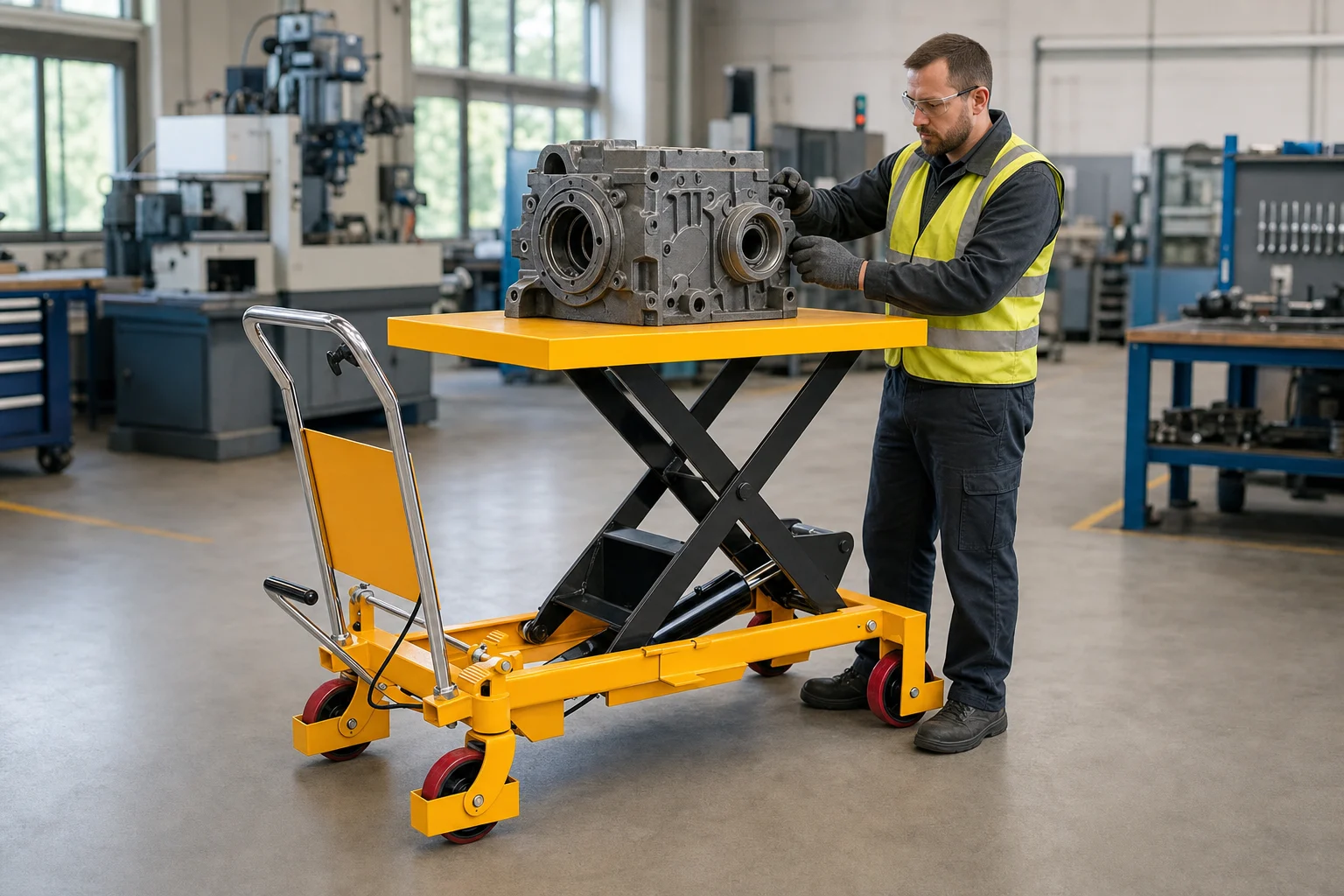
A hydraulic scissor lift table brings the load to working height instead of bringing your back down to the load. Whether it is a mobile cart that doubles as a lifting workbench or a stationary table feeding a production line, the job is the same: position goods at the ergonomically correct height for picking, assembly, palletising or machine feeding. Bent-over lifting is the single biggest source of workplace back injuries in warehouses and workshops — a lift table is the cheapest insurance against it.
This guide walks through the decision in the order that matters: manual or electric lifting, mobile or stationary, how high and how much weight, and the special builds (low-profile, U-shaped, stainless) that solve specific problems. All tables below are configurable online with prices shown, built to the European lift-table standard.
1. Manual, semi-electric or electric?
| Manual (foot pump) | Semi-electric | Electric (power pack) | |
|---|---|---|---|
| How it lifts | Operator pumps a foot pedal | Battery-powered pump, push-button lifting | AC motor and internal hydraulic power pack, 24 V controls |
| Typical machine | Mobile lift table carts, 150–1,500 kg | Semi-electric mobile tables, 300–500 kg | Stationary tables, 1,000–8,000 kg |
| Best for | Occasional lifts, moving loads between stations | Frequent lifts with the mobility of a cart | Production lines, repetitive daily cycling, heavy loads |
The honest crossover: a foot pump is perfectly fine for a few lifts per hour. When operators cycle the table all day — or the load regularly sits near the top of the capacity range — the battery-powered semi-electric version lifts 500 kg to 900 mm in about 10 seconds at the push of a button, and a stationary electric table does it thousands of times a year without complaint.
2. Mobile lift table carts: the workshop all-rounder

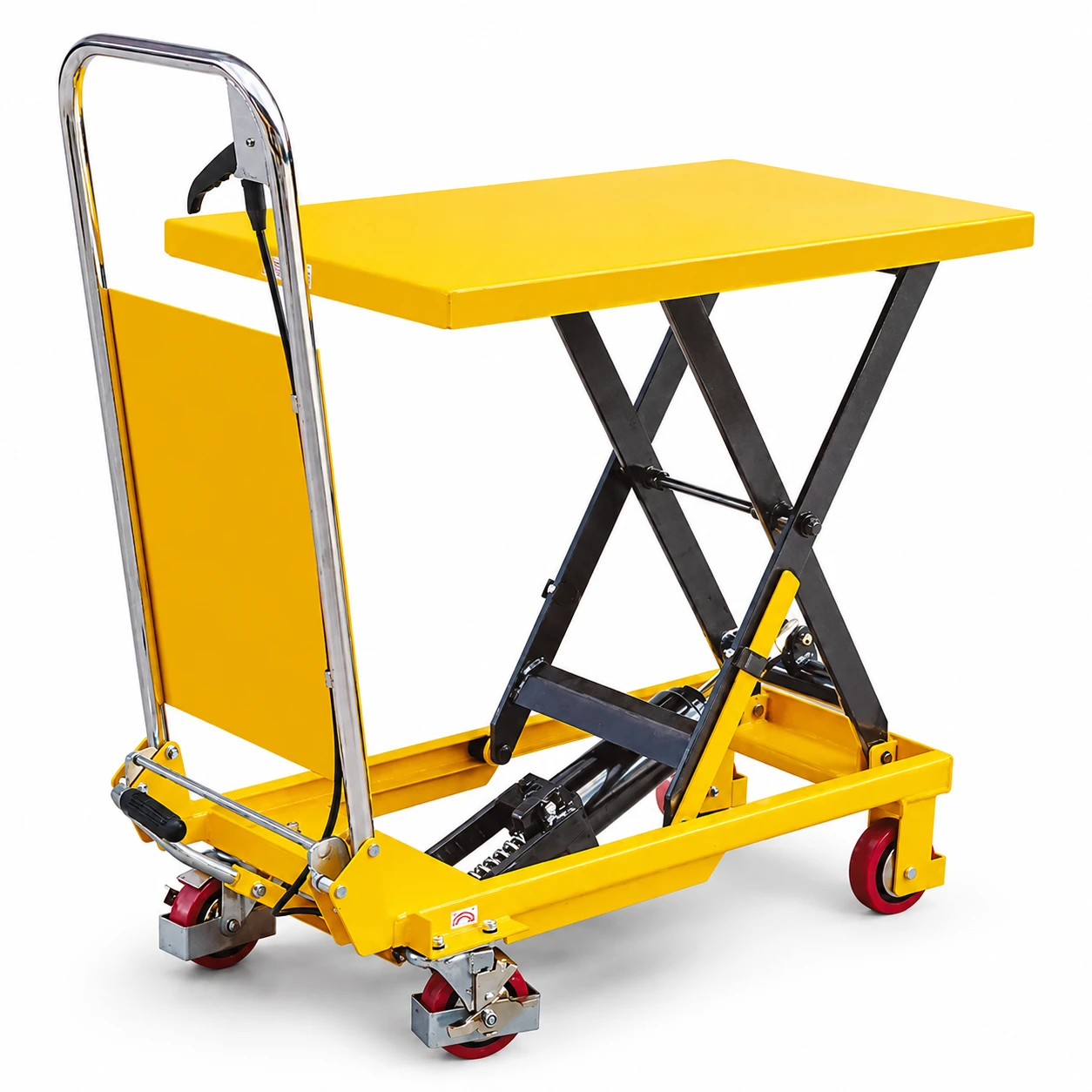
A mobile scissor lift table (lift table cart) is a lift and a transport trolley in one: wheel the load to the machine, pump it to height, work, wheel it away. The range runs from the compact 150 kg up to 1,500 kg; the mid-range MPS300 (300 kg, 855×500 mm platform, 340–900 mm lift, from €306) is the classic workshop companion. Sizing beyond capacity:
- Need more height? Double-scissor versions lift further: the MPS350D reaches 1,300 mm (from €430) and the MPS680D 1,500 mm — elevated assembly and service work without a ladder.
- Long workpieces? The MPS500T carries 500 kg on an oversized 1,600×800 mm platform.
- Yard and uneven floors? The rough-terrain MPS200 rides on large polyurethane wheels.
3. Stationary electric tables: 1 to 8 tonnes for the production line
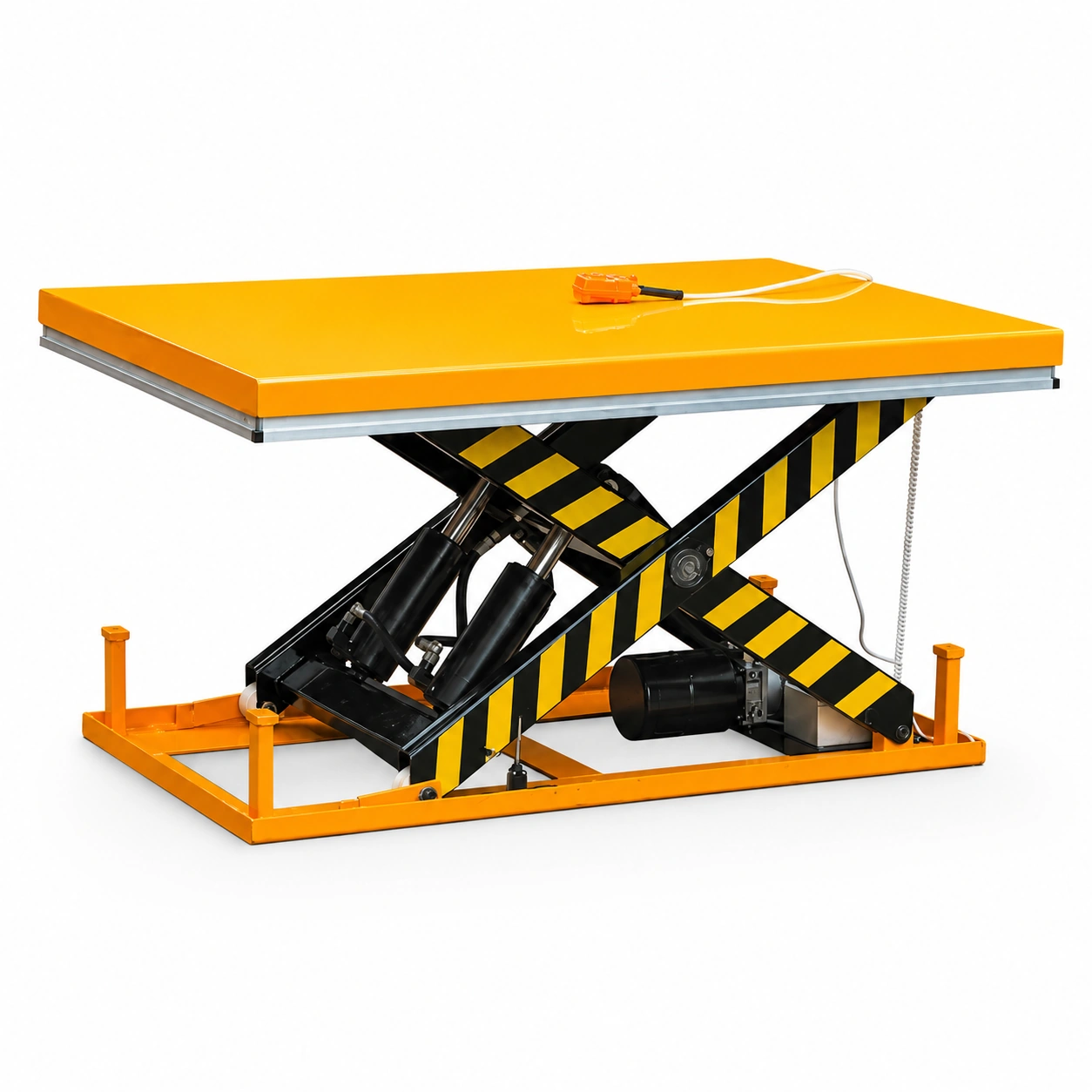
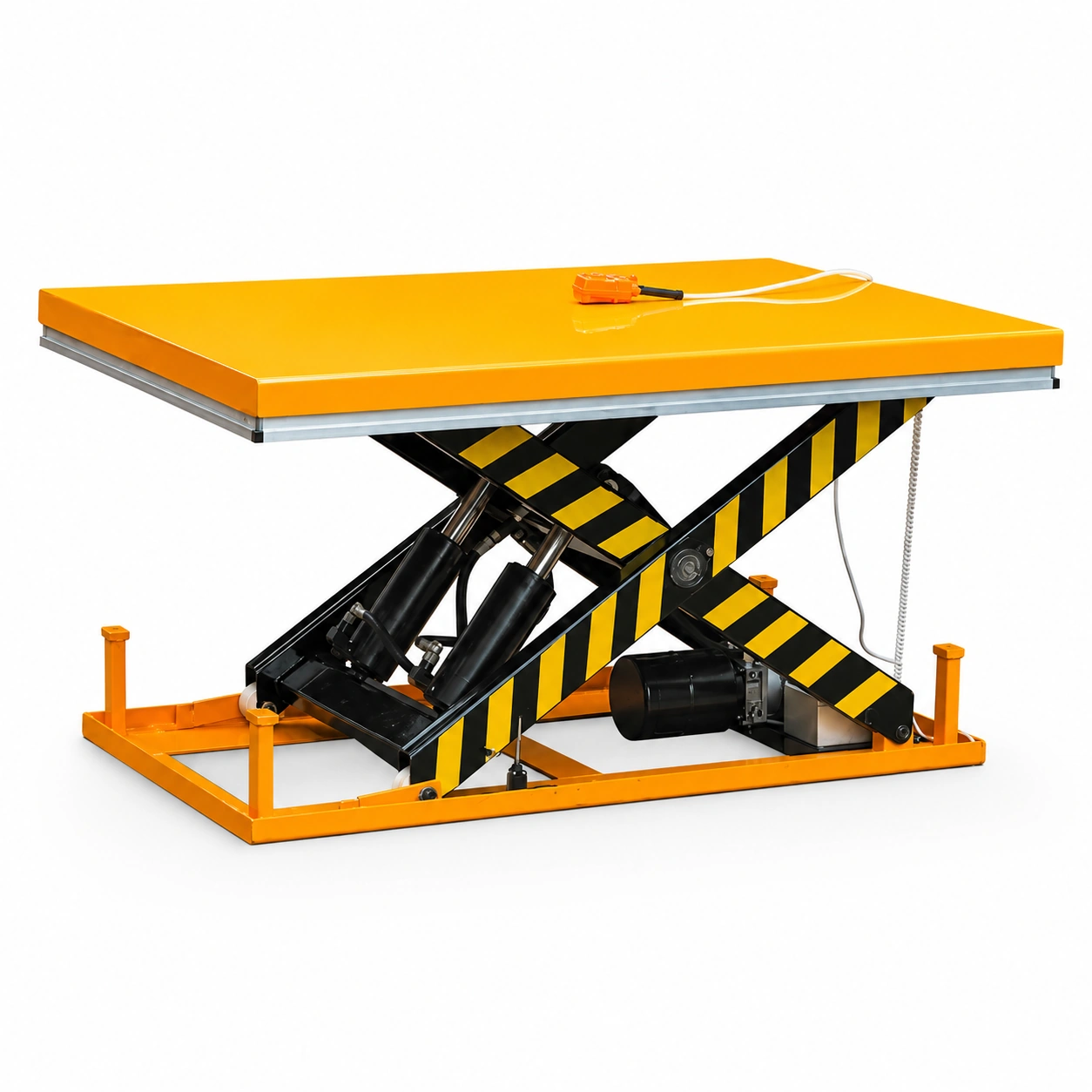
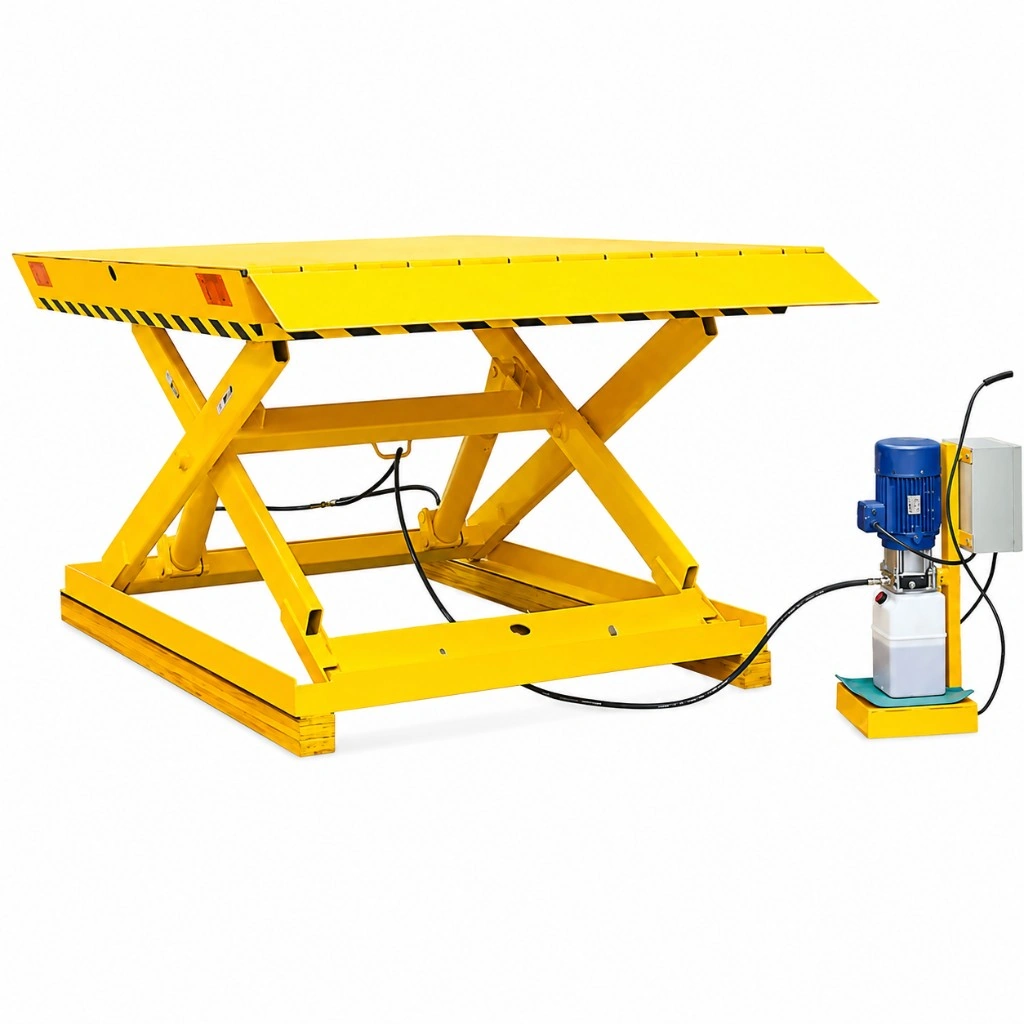
Stationary low-lift tables are the production workhorses: JHS1000 (from €1,332) through JHS6000 cover 1–6 t with platforms up to 2,000×1,000 mm, heavy-duty HPS versions add faster, stronger frames, and the double horizontal scissor JHS-D stretches platforms to 3,000 mm and capacity to 8 t for oversized loads. They install above ground or recessed in a floor pit (platform flush with the floor), and the safety package is serious: aluminium safety contact edges that stop lowering on contact, overload relief valve, check valves that lock the table if a hose fails, and 24 V controls.
4. High-lift tables: when one scissor is not enough
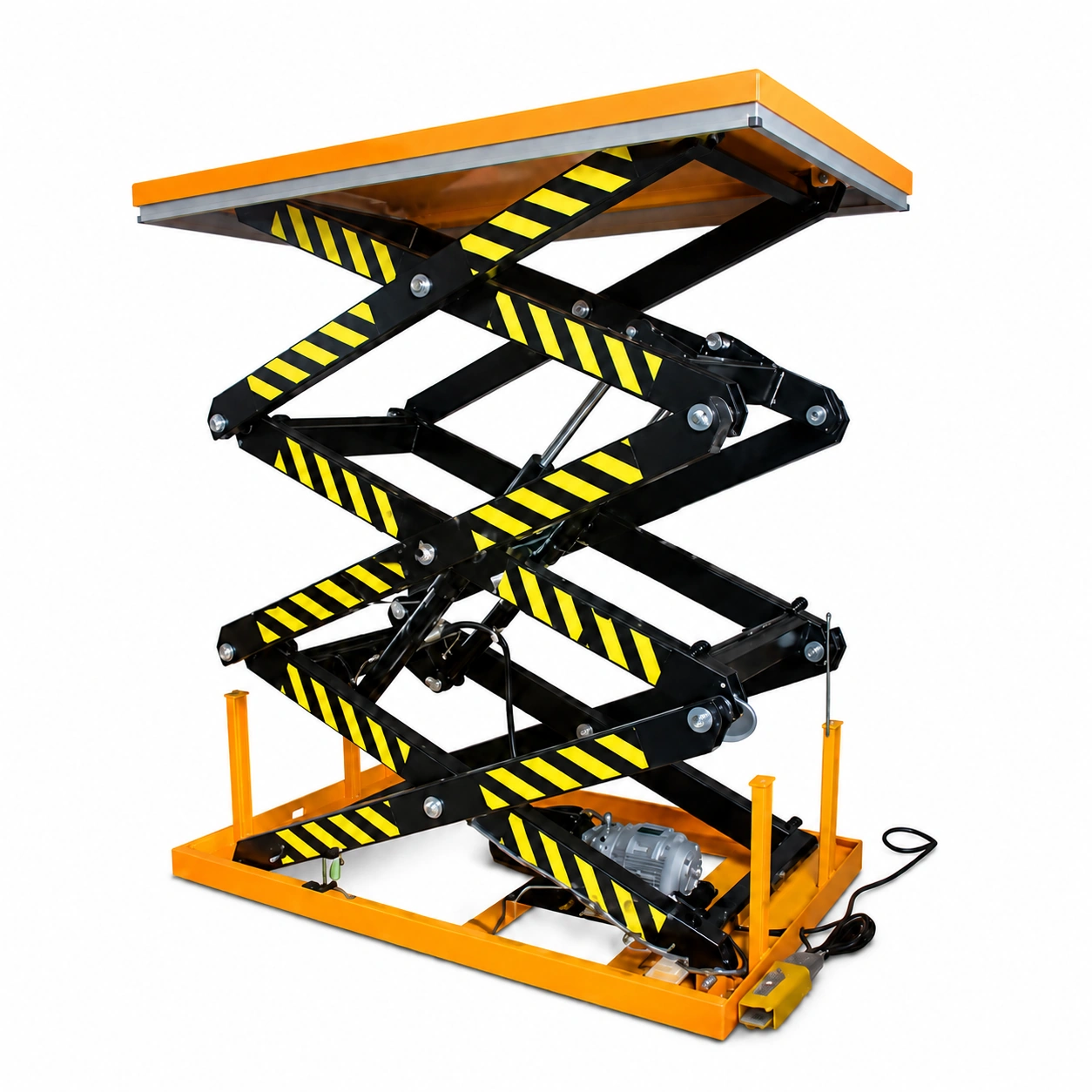
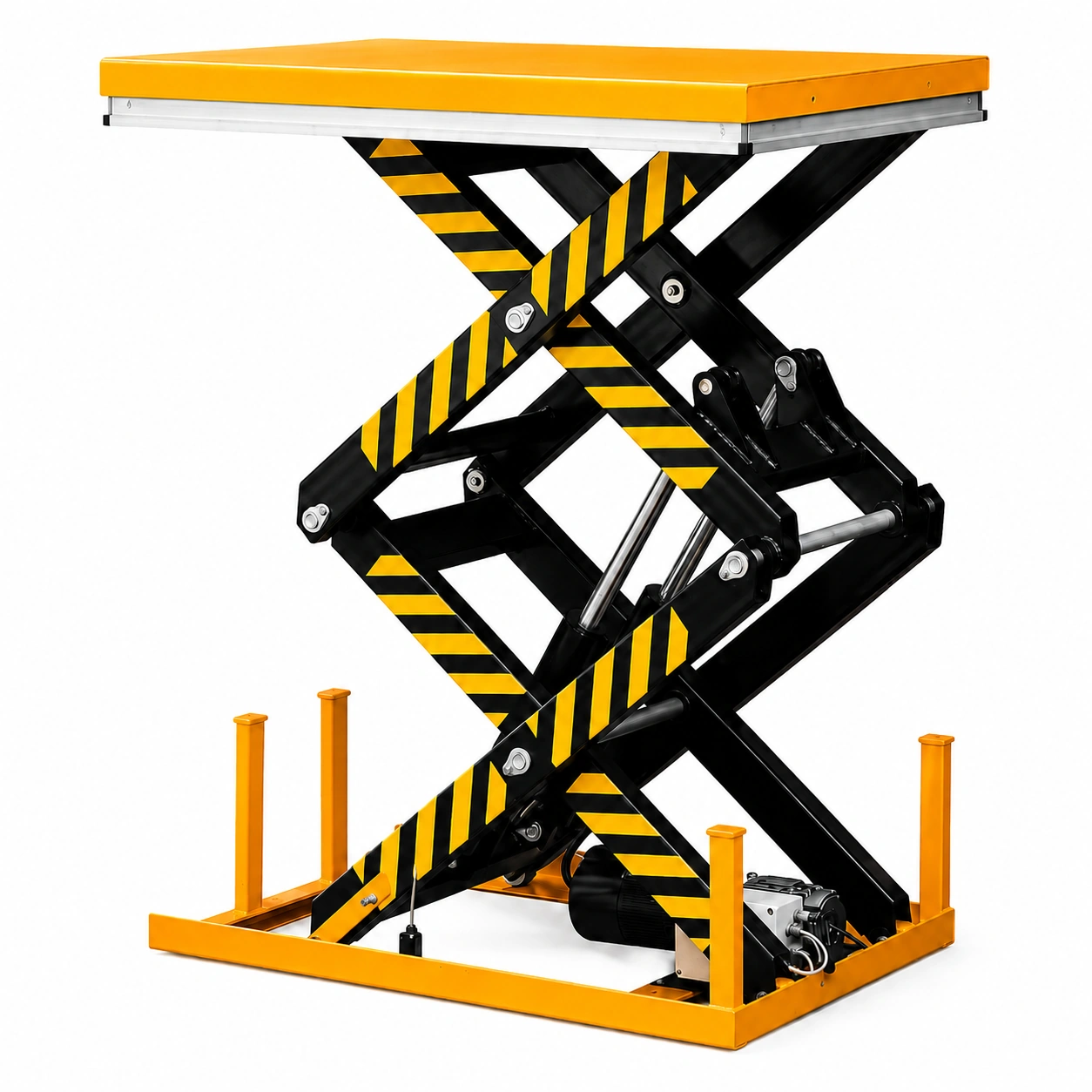
Stacking scissor packs multiplies travel: high-lift tables serve mezzanines, machine in-feeds and level changes. Double scissor DHS (1–4 t, from €1,820) lifts to 2,050 mm for ergonomic mid-level work; triple scissor THS (1–5 t) reaches 5,100 mm; and the quadruple scissor CHS transfers 400–2,000 kg between floors up to 4,800 mm. The trade-off is footprint versus height: more scissor stages lift higher from the same base but need more structure — which is exactly why these are configured to the application rather than bought off a shelf.
5. Low-profile and U-shaped: pallet loading without a pit
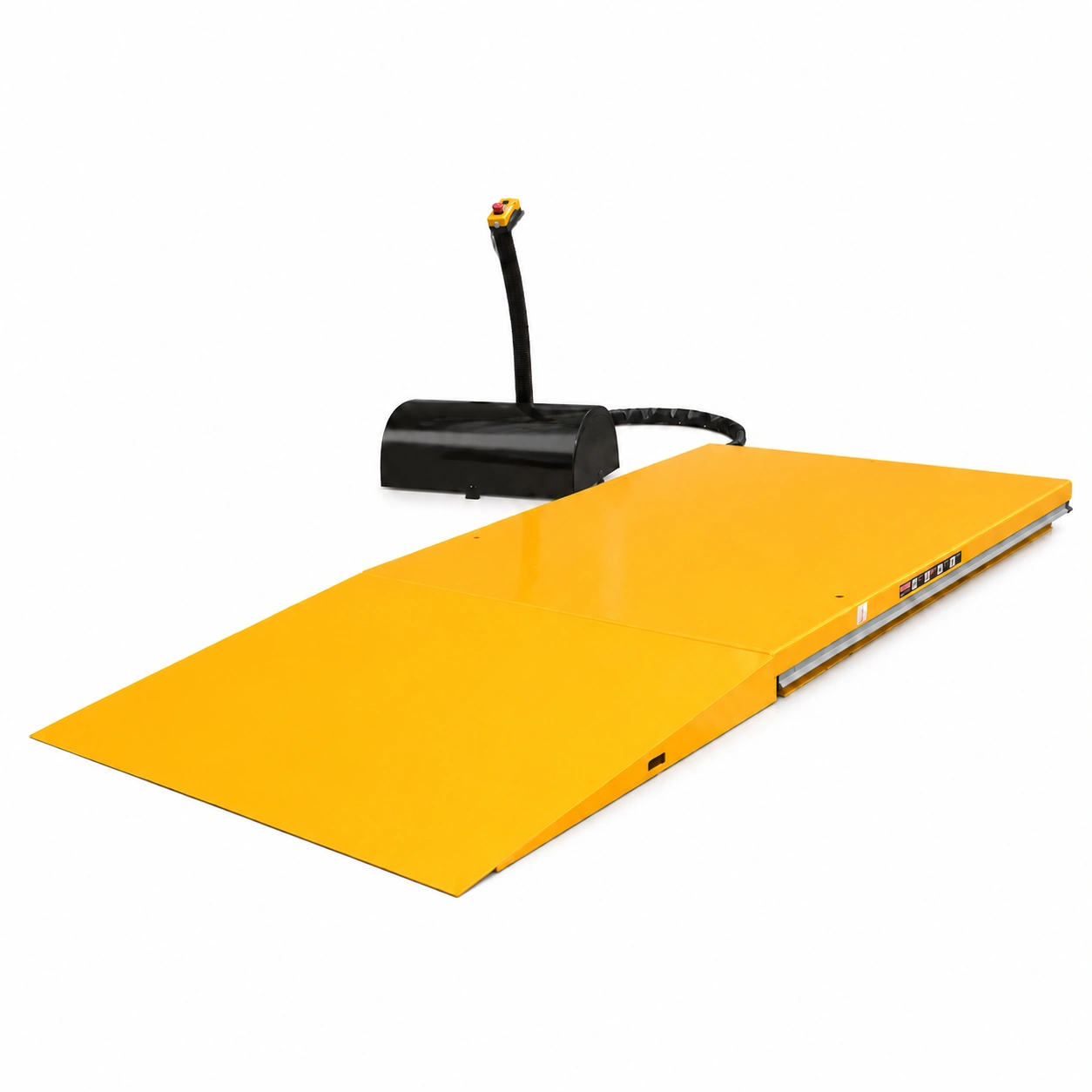
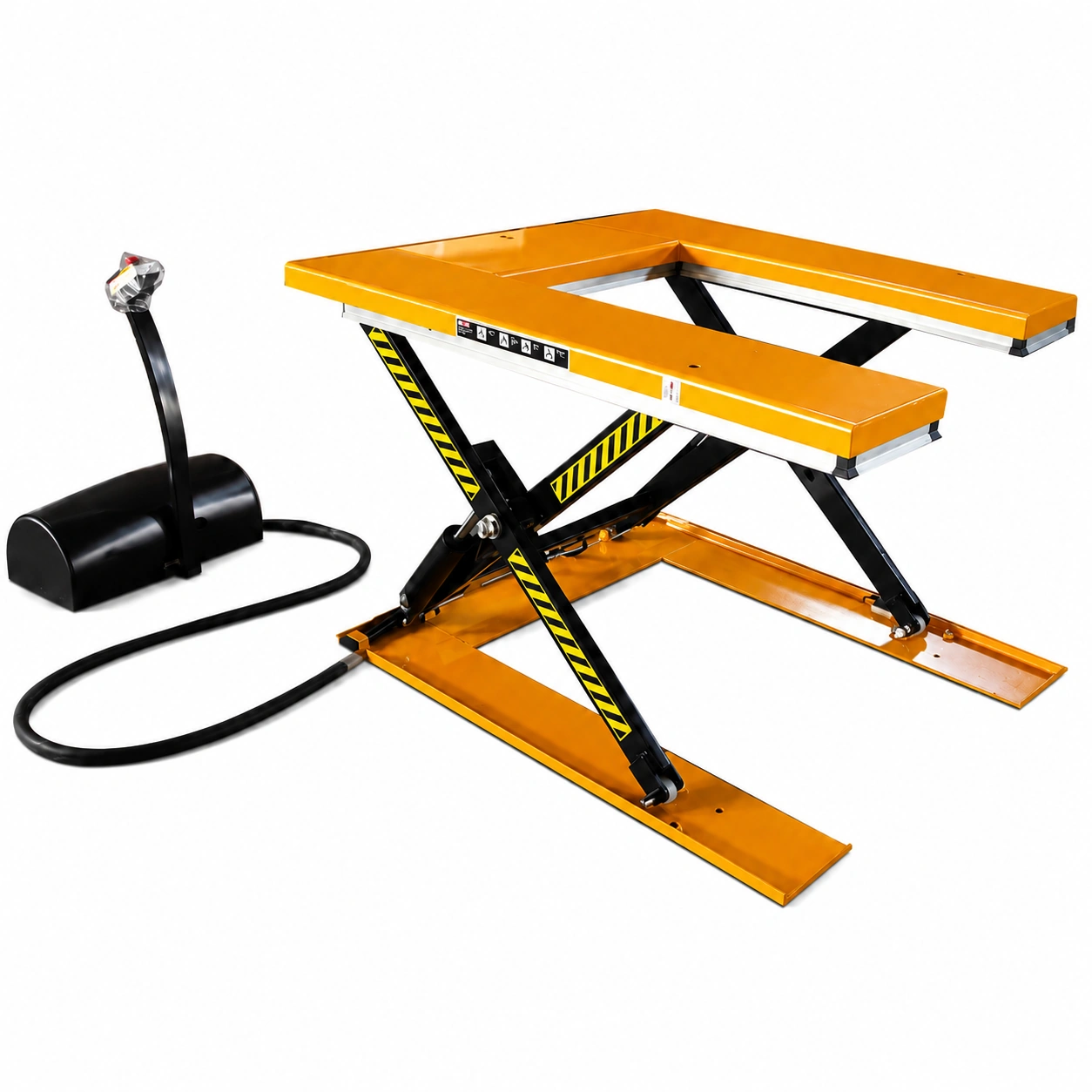
A standard table lowered to 230 mm still needs a ramp, a pit or a forklift to get a pallet onto it. Low-profile tables remove that problem: the NPS (1–2 t, from €1,752) closes to just 85–105 mm and loads with a short ramp; the ultra-low NPSU closes to an extraordinary 25–35 mm. Smarter still for pallets: the U-shaped UHS (600–2,000 kg, from €1,680) lets a hand pallet truck drive straight into the U with the pallet — no ramp, no pit, no forklift. Set the pallet down, back out, lift.
6. Stainless steel for food, pharma and washdown
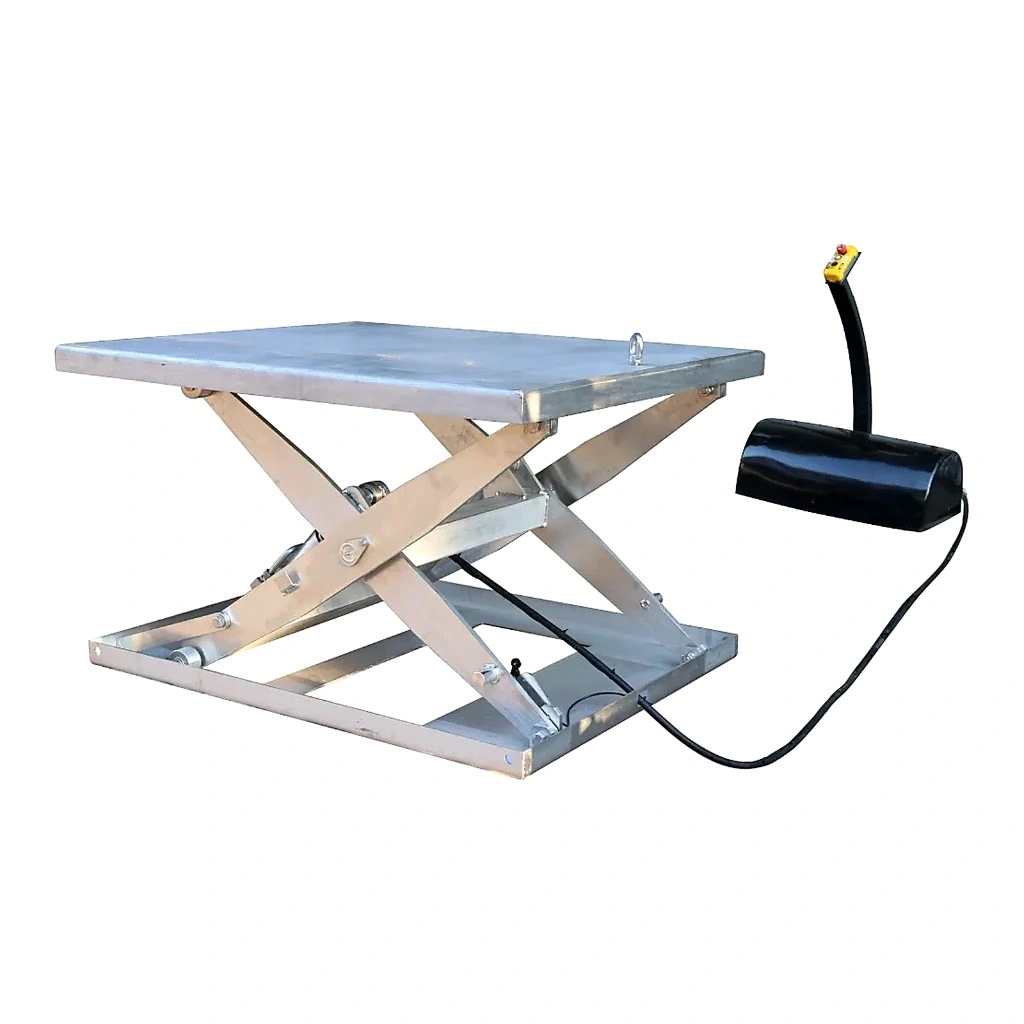
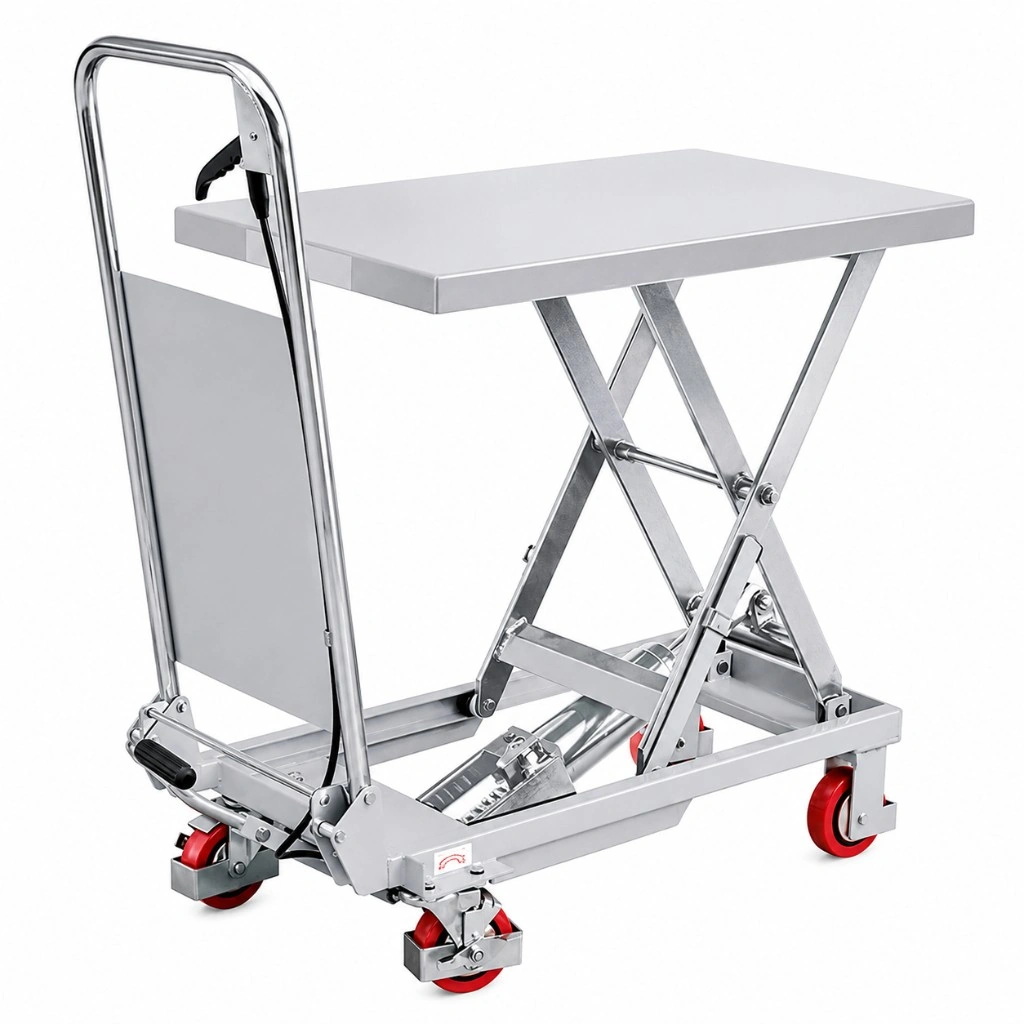
Where daily washdowns and hygiene rules apply, painted steel does not last. The stainless range covers both worlds: mobile foot-pump tables (MPS300S and siblings, 150–500 kg), the U-shaped UHS1000S for Euro-pallet handling, and the electric JHS1800S (1,800 kg, from €6,000) — all in AISI 304 stainless steel.
7. Sizing checklist and safety
- Capacity: heaviest load plus a margin — and remember the load should sit centred; off-centre loads reduce the effective rating.
- Platform: larger than the load footprint; long goods want the JHS-D or MPS500T formats.
- Heights: check BOTH ends — the lowered height must accept the load (pallet truck? forklift? crane?), the raised height must reach the working level.
- Duty: lifts per hour decide manual vs electric more than the load does.
The stationary series complies with EN 1570:1 (the European lift-table safety standard) and ANSI/ASME requirements: safety contact edges, overload valves, hose-failure check valves and regulated lowering speed are standard, and every table ships CE-marked with the EC declaration of conformity. Like all lifting equipment, plan a yearly inspection — hydraulics and pivot points are the wear items.